
““How Long Does a Torn Shoulder Muscle Take to Heal?”

This is one of the first questions people ask after experiencing a sudden pull or ache deep in the shoulder following a heavy lift, fall, or other injury. You may also be wondering how soon you can return to your everyday routine.
The answer depends on several factors, including the grade of the tear, the muscle involved, and how the injury is managed during the first few weeks. In this article, we explain the typical shoulder tear recovery time, what can support healing, and what may slow your recovery down..
The honest answer is that it depends on the grade of the tear, which muscle is involved, and how the first few weeks are managed. We carefully explain everything you need to know in this article. You’ll understand the realistic timelines, what speeds recovery up, and what tends to slow it down. Our team of physiotherapists and sports therapists in Manchester have also helped hundreds of Manchester athletes and 9-5 workers who popped something while reaching for a top shelf recover from their shoulder muscle tears.
What Is a Torn Shoulder Muscle?
The shoulder is the most mobile joint in the body, which also makes it one of the least stable. It relies heavily on the rotator cuff muscles (supraspinatus, infraspinatus, teres minor, subscapularis), the deltoid, and surrounding stabilisers to hold the joint together during movement. When one of these muscles is stretched beyond its capacity, the fibres can partially or fully tear.
Shoulder muscle tears are classified according to the severity.
Grade 1 (mild strain)
A small number of fibres are overstretched or micro-torn. It’s painful but your shoulder strength is still largely intact.
Grade 2 (partial tear)
A moderate number of fibres are torn. There is noticeable weakness, loss of range and you experience pain with movement.
Grade 3 (complete tear or rupture)
The muscle is torn all the way through, or has pulled away from its attachment. There’s often a visible bruising or a deformity, and it usually requires a specialist opinion on whether surgery is needed.
Understanding the severity of your shoulder tear is very important because it’s the biggest factor in predicting your recovery time. A good physiotherapist will begin with an initial assessment before committing you to a rehab plan.
How Long Does a Torn Shoulder Muscle Take to Heal?Average Recovery Time by Grade
| Grade | Typical Recovery Time | Notes |
| Grade 1 (mild strain) | 1–3 weeks | This often resolves with relative rest, guided movement, and load management |
| Grade 2 (partial tear) | 4–8 weeks | It requires a structured rehab programme for athletes who wish to return to their training routines |
| Grade 3 (complete tear/rupture) | 3–6 months (non-surgical) or up to 6–9 months (post-surgical) | It is the most delicate and often needs imaging and a specialist referral to confirm the extent of damage |
Those bands are averages rather than promises. We have published a fuller shoulder tear recovery timeline, broken down week by week and by activity level.
How long does a torn shoulder muscle take to heal?
The answer depends on the severity of the injury and how well the shoulder responds to rehabilitation. These timeframes describe tissue healing, not necessarily a full return to pre-injury performance. A grade 2 rotator cuff tear might feel “healed” at six weeks but still need another month of strength work before it can handle full training loads without setback.
Why Does Shoulder Tear Recovery Time Vary So Much?
So, how long does a torn shoulder muscle take to heal in real-world situations? Two people with what looks like the same tear on a scan can have very different recovery journeys. In our experience treating clients across Manchester, the recovery time largely depends on :
1. Which Muscle is Torn
Rotator cuff tears (especially supraspinatus) tend to heal more slowly than deltoid or bicep-related strains. This is because of relatively poor blood supply to parts of the cuff tendon.
2. Age and Tissue Quality
The older the tissue, the longer it takes to remodel. Tissue with a history of previous strain in the same area also takes a longer time to heal .
3. How Early Proper Treatment Starts
Tears that are rested completely for too long or loaded too aggressively, too soon both tend to heal more slowly and are more likely to become chronic issues.
4. Underlying Biomechanics
If the tear happened because of poor scapular control, postural overload, or a training imbalance, healing the muscle without addressing the cause often leads to re-injury.
5. Adherence to Rehabilitation
This is the only factor that is entirely within a client’s control. Clients who adhere to clinical instructions often experience the biggest outcome in their recovery process.
What Does Recovery From a Torn Shoulder Muscle Look Like?
“The mistake I see most often isn’t people doing too little. It is people either freezing the shoulder completely out of fear, or rushing back into the gym because the sharp pain has faded. Neither approach respects how muscle tissue actually heals. The fibres need controlled, progressive load to rebuild in the right direction . Not none, and not too much, too soon.”
— Sports Therapist, Hekas Rehabilitation Center, Manchester
This reflects the phased approach we use with almost every shoulder muscle tear, regardless of grade. Knowing how long a torn shoulder muscle takes to heal is only part of the recovery process. How you manage the injury during each stage can also affect when you can safely return to normal activities
Phase 1 – Protect and calm down (roughly week 1–2)
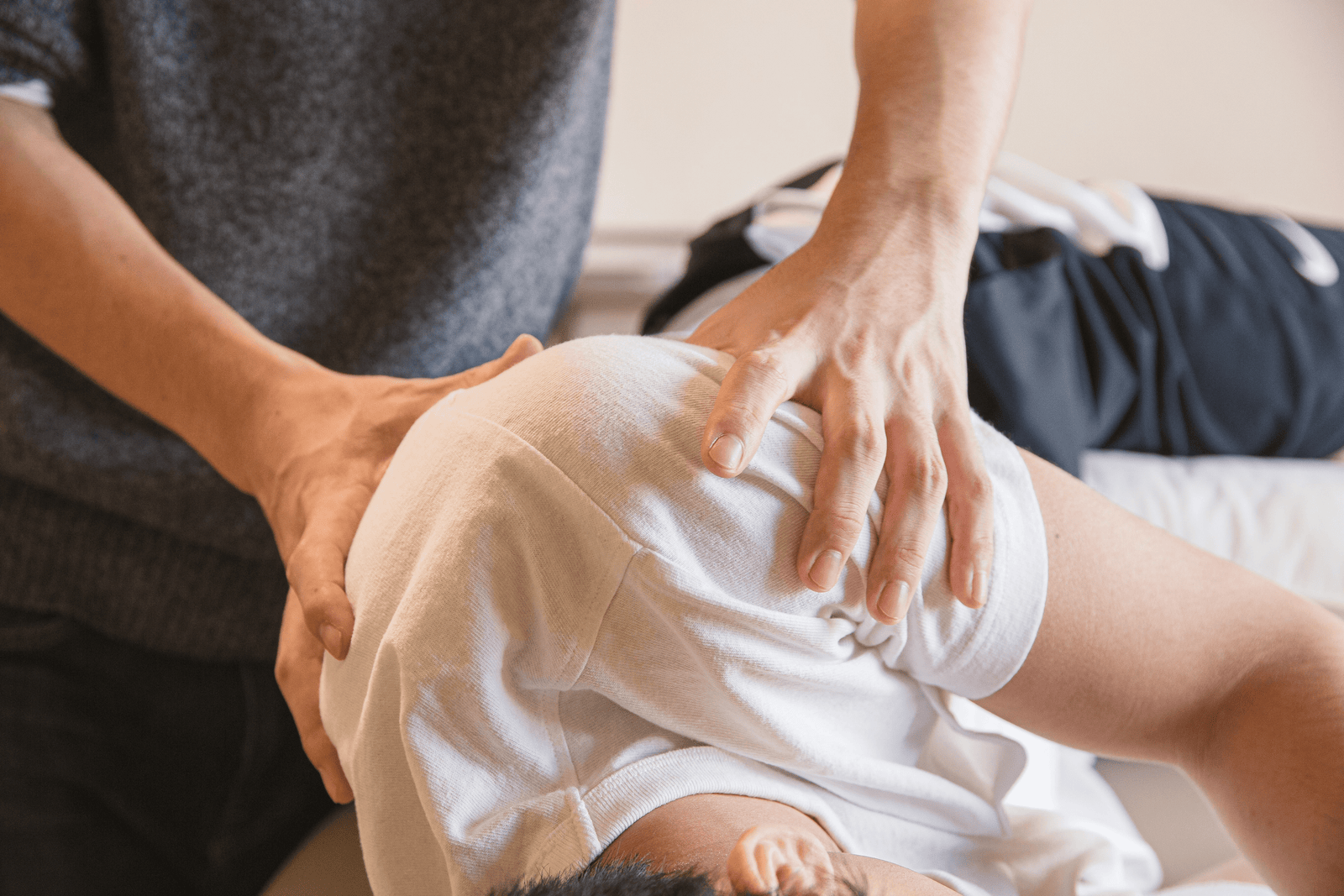
The priority at this stage is to reduce pain and irritation without letting the shoulder stiffen up. This usually means avoiding movements that reproduce sharp pain, ensuring gentle pain-free movement, and administering hands-on treatment to manage swelling and guarding in the surrounding muscles.
Phase 2 – Restore movement and light strength (roughly week 2–6, depending on grade)
Once the acute pain has settled, we introduce controlled strengthening by starting with isometric holds, before progressing to light resistance band and dumbbell work. This is also where we start correcting any movement compensations that crept in while the shoulder was guarded.
Phase 3 – Load and return to activity (variable, from week 4 onward)
Strength work becomes more sport or task-specific. For a client returning to weightlifting, that means rebuilding, pressing and pulling strength under supervision. For a builder or delivery driver, it means testing the shoulder under real working loads before signing off a full return. Skipping straight from Phase 1 to Phase 3 which is common when people self-manage is one of the most frequent causes of re-tears we see in our clinic.
Shoulder Tear Recovery Time: A Recovery Example From Our Manchester Clinic
A client in his late 30s came to Hekas after he felt a sharp pull in his shoulder during a heavy bench press session. Our initial assessment identified a grade 2 partial tear of the pectoralis major, with some compensatory overactivity in the front of the shoulder that had built up over months of training the same movement pattern without addressing an underlying strength imbalance.
Instead of simply resting the area, we combined hands-on therapy to reduce guarding in the surrounding muscles with a graded strength programme that started with isometric chest presses at pain-free ranges, then progressed to resistance band and light dumbbell work by week three. By week six, he was back to controlled barbell pressing at reduced load, and by week nine he had returned to full training, including bench press, with no recurrence at follow-up.
The full return took nine weeks rather than the six weeks sometimes quoted for grade 2 strains. This clearly shows that the underlying imbalance needed to be corrected alongside the tear itself, not just the tear grade on its own.
5 Warning Signs You Should See a Therapist Rather Than Wait It Out
Most mild shoulder strains often settle with sensible rest and gradual movement. But a few signs point to something that needs a proper assessment rather than a wait-and-see approach:
- Pain that hasn’t noticeably improved after 7–10 day
- Visible bruising, swelling, or a change in the shape of the shoulder
- Struggling to lift the arm away from the body or overhead
- A popping or tearing sensation at the time of injury
- Pain that disturbs sleep or worsens with rest rather than improving
Any of these signs indicates the need for a same-week assessment, since some complete tears respond far better to early intervention.
How Hekas Approaches Shoulder Muscle Tear Rehab
With 16 years of combined clinical experience and a team of eight registered physiotherapists and sports therapists, Hekas has treated shoulder tears across the full spectrum. From regular five-a-side players to elite athletes and 9-5 workers, every plan starts with an assessment to confirm the grade and likely cause of the tear, followed by a personalised, evidence-based rehab programme.
You can read how our personalised rehab programmes are structured, from assessment through to return-to-sport testing.
We combine hands-on treatment with structured strength progression, clear milestones, and honest timelines so you know not just that you’re healing, but roughly when you can expect to be back doing what you love.
If you’re dealing with shoulder pain and want a clear, honest recovery timeline, the Hekas team in Manchester offers thorough assessments and personalised rehab plans built around your goals. Whether you desire to get back to the gym, your sport, or simply be able to move without pain, our physiotherapists have the hands-on experience needed to achieve that.
Reach out today to schedule a consultation with our team.
Frequently Asked Questions
- Can a torn shoulder muscle heal on its own?
Mild (grade 1) strains often do improve without formal treatment while Grade 2 and grade 3 tears usually need a structured rehab plan to heal well and avoid recurring pain or weakness later on.
- How do I know if my shoulder tear is serious?
Significant weakness, visible bruising or swelling, a popping sensation at the time of injury, or pain that hasn’t improved after a week are all reasons to get it properly assessed rather than waiting.
- Is it normal for shoulder pain to come and go during recovery?
Some fluctuation is normal as you return to activity, particularly in phase 2 and 3 of rehab. If you experience pain that sharply increases or returns to its original intensity, that’s a sign to go back and reassess.
- How soon can I start physiotherapy after a shoulder tear?
Generally, the sooner the better, once any acute swelling has been assessed. Early rehabilitation helps avoid compensation patterns that can slow recovery down later.
5. How Long Does a Torn Shoulder Muscle Take to Heal?
The recovery time depends on the severity of the tear, the muscle involved, and the treatment approach. Mild strains may improve within a few weeks, while more severe tears can take several months to recover.
6. How much does shoulder rehab cost?
It depends on the grade of the tear and how many sessions you need — the nine-week case above is a realistic reference point. We’ve broken down what a rehab programme of that length costs, including package options.