

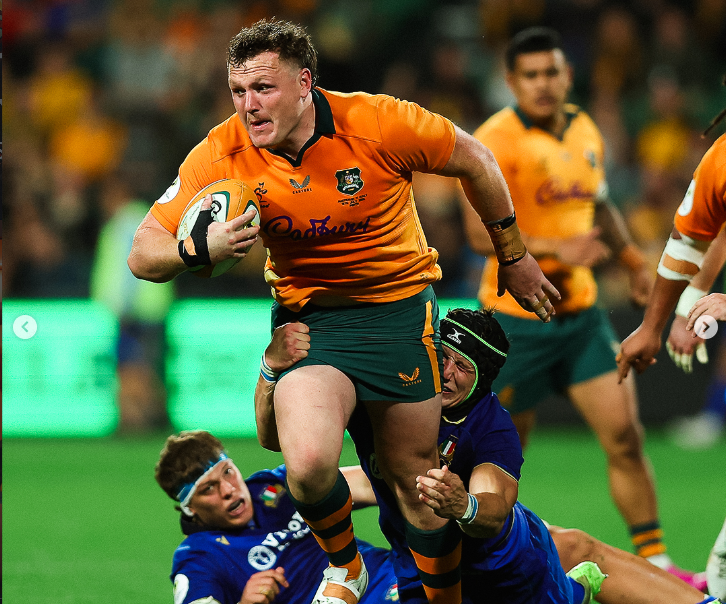
Quick answer: Ankle sprains are the most common injury in rugby. Most can be prevented with balance work, strength training and taping. Most players get back on the pitch within 2 to 8 weeks with the right rehab.
The Injury That Cost a Wallaby His Spot
New Wallabies coach Les Kiss has just named his first squad. It is a big moment for any coach and a bigger one for the players who make the cut.
Len Ikitau did not make it. Not because of form. Because of his ankle.
Tom Hooper missed out too, with a shoulder problem. As Nine reported in its breakdown of Kiss’s first Wallabies squad, both men were ruled out through injury before selection was even a conversation.
Here is the frustrating part. An ankle sprain sounds minor. You roll it, you limp off, you ice it. But it can quietly cost you a season, a place in the squad, or years of niggling instability.
Why Rugby Is So Hard on Ankles
Think about what happens in a match. You plant your foot and change direction at full speed. You land on someone else’s boot in a ruck. A scrum collapses while your foot is stuck in the turf.
Your ankle is asked to do a lot, very fast, while tired.
The Three Types You Need to Know
| Type | What happens | Time out |
|---|---|---|
| Lateral sprain | Foot rolls inward | 2 to 6 weeks |
| High (syndesmosis) sprain | Foot stays planted, leg twists | 6 to 12+ weeks |
| Medial sprain | Foot rolls outward | 4 to 8 weeks |
And here is the stat that should worry every player: the biggest risk factor for spraining your ankle is having already sprained it before. Usually because the first one never healed properly.
How Teams Can Stop It Happening
The good news is that ankle sprains are one of the most preventable injuries in sport. Five things make the biggest difference.
- Balance training. Stand on one leg. Sounds too simple to matter, but 10 minutes three times a week genuinely cuts your risk. Close your eyes to make it harder.
- Strengthen your calves and the muscles on the outside of your shin. These are the muscles that catch your ankle before it rolls. Heel drops and resistance band work do the job.
- Tape or brace it. Especially if you have hurt it before. It is not a sign of weakness, it is smart.
- Warm up properly. A rushed warm up is a wasted one. Include landing and cutting drills, not just jogging.
- Watch your training load. Most sprains happen late in matches when players are tired and control drops off. Fatigue is a risk factor.
How to Recover Properly
Forget the old advice about resting for weeks. That approach leaves ankles weak and stiff.
The modern method is called PEACE and LOVE. Protect the ankle early, then load it, move it and rebuild it.
Days 1 to 3: Protect and compress. Move it gently within pain-free range.
Days 4 to 14: Get your movement back. Start loading it. Hands-on treatment helps reduce swelling and stiffness here.
Weeks 2 to 4: Build strength and retrain your balance.
Week 4 onwards: Add jumping, cutting and contact work before you go near a match.
Skip the balance stage and you will very likely roll it again. This is the single most common mistake we see.
With Australia facing Japan in Osaka and then Townsville, the squad’s full injury picture shows how quickly a short recovery window turns into a missed tour.
When Should You Get It Checked?
Come and see someone if you cannot put weight on it, if it is still swollen after a week, or if it feels wobbly months later. That last one has a name: chronic ankle instability, and it does not fix itself.
At Hekas Sports Therapy in Manchester, our team of eight registered physiotherapists and sports therapists finds the actual cause, treats it hands-on, and gives you a rehab plan you can follow. The first 15-minute assessment is free.
The phases are the same whatever the joint — you can see how that rehab plan is built, from first assessment through to return-to-sport testing.
Common Questions
How long will I be out?
Mild sprain: 1 to 3 weeks. Moderate: 3 to 6 weeks. Severe or high ankle sprain: 8 to 12 weeks or more.
Should I ice it?
A little ice helps with pain. But too much can slow healing. Compression, elevation and gentle early movement matter more.
Can I stop it happening again?
Yes. Balance training and strengthening the right muscles make a real difference.
What will it cost?
The free assessment gives you a realistic session count first. After that, our rates and what a block includes are set out in full — a mild sprain and a high ankle sprain are very different commitments.