Skip to content

“How long will it take for my shoulder tear to heal?”
“Will I be ready for my marathon in three months?”
“When can I resume training?”
These are the first questions most Manchester athletes ask after hearing they have a shoulder tear. The answer they want is simple and specific, but it’s often more complex since recovery timelines depend on multiple factors that vary from person to person.
Research shows that recovery for smaller tears managed conservatively may take around 6 to 12 weeks, while larger tears requiring more intensive rehabilitation can extend to several months. Understanding these factors helps you set realistic expectations and plan your return to activity appropriately.
Whether you’re a competitive athlete, weekend warrior, or someone who just wants to lift their arm without wincing, our guide provides a detailed explanation of shoulder tear recovery and how you can stay motivated through the rehabilitation process.

What are The Different Kinds of Shoulder Tears? (How to Recognise The One You’re Actually Dealing With)
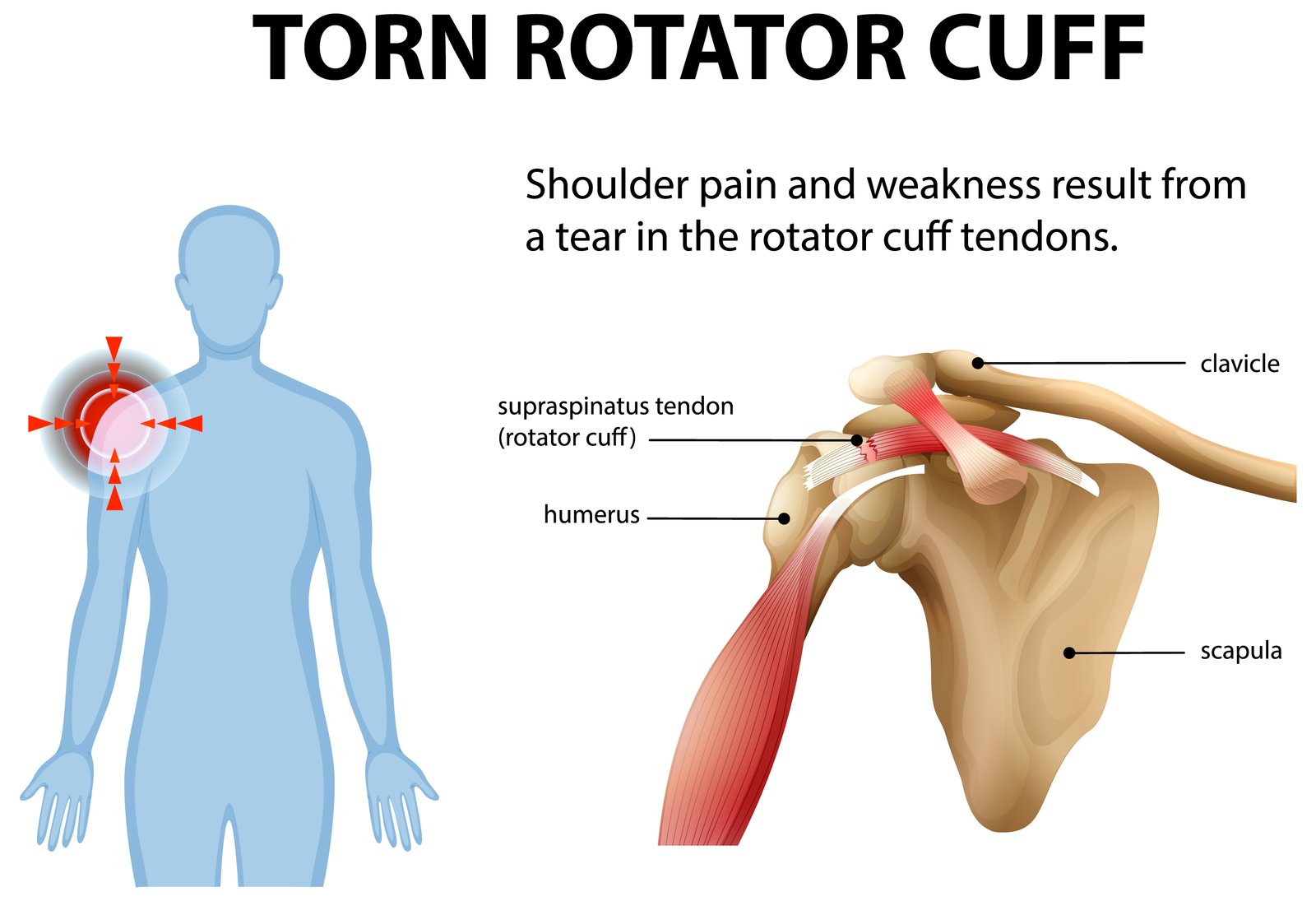
Not all shoulder tears are created equal, and this is the first factor that affects healing time. The rotator cuff consists of four muscles and tendons that stabilize and move the shoulder joint. When these structures tear, the extent of damage determines the right treatment approach and recovery duration.
Here are the major kinds of shoulder tears you need to know:
Partial-Thickness Tears
A partial tear goes only part of the way into the tendon, usually described in terms of how deep the tear is. These can range from just 1 millimeter deep to 50 percent or more of the tendon’s thickness. Treatment is not necessary if there is no pain associated.
For painful partial tears, the recovery timeline is a range of 6-12 weeks. Many Manchester athletes with partial tears respond excellently to targeted rehabilitation without ever needing surgical intervention.
Full-Thickness Tears
A full-thickness tear is when the wear in the tendon goes all the way through the tendon. This simply means that there has been a complete disruption of the tendon tissue, and a more extensive treatment would be required.
While conservative management still works for many patients, the size of full-thickness tears matters enormously. Small tears under 1cm respond differently from massive tears exceeding 5cm. Smaller symptomatic full-thickness tears have a slower recovery time and must be considered for conservative management.
Traumatic vs Degenerative Tears
These are one of the most popular shoulder tears experienced by athletes. They are tears from specific injuries, like falling onto an outstretched arm during sport.
They often heal differently from tears that develop gradually from overuse or aging. Traumatic tears in young people have better healing potential than degenerative tears in elderly people.
Recovery Timeline for Shoulder Tears: What to Expect Week by Week
For partial tears and small full-thickness tears, athletes are encouraged to consider a conservative treatment approach. Here’s what the typical timeline looks like when rehabilitation works as it should.
Weeks 1-2: Pain Control and Protection
The first phase focuses on reducing pain and inflammation while protecting the injured tissue from further damage. You’ll likely need to reduce activities that aggravate symptoms, use ice, and other anti-inflammatory strategies. You’ll also need to begin gentle range-of-motion exercises.
This isn’t complete rest. Manchester therapists still emphasize controlled movement that maintains shoulder mobility without stressing the injured tendon. The goal is to prevent stiffness while allowing healing to begin.
Weeks 3-6: Progressive Mobility and Early Strengthening
As pain reduces, rehabilitation intensifies. During this phase, you’ll work on restoring full shoulder range of motion, strengthening the rotator cuff muscles with light resistance, improving scapular stability and control, and addressing any compensation patterns that developed.
Many athletes notice significant improvement during this period as the pain decreases substantially. Daily activities become easier, and you start feeling like your shoulder is functioning more normally.
Weeks 6-12: Functional Strengthening and Activity Progression
The final phase of initial rehabilitation transitions from general strengthening to sport or activity-specific training. This means you’re not only able to carry out daily activities, but you can also begin preparing to return to your specific sport. Return to sports can be considered after about 3 to 6 months, depending on progress.
You’ll gradually increase resistance training, practice movements specific to your sport or work, build endurance for sustained activity, and test your shoulder with progressively challenging tasks.
The 2-3 Month Decision Point
If a patient tries conservative treatments and continues to have pain and difficulty with activities after two or three months, he or she may consider surgery to repair the tear.
Factors That Influence Your Personal Recovery Timeline
While there’s a general timeline for shoulder tear recovery, it is important to understand that every person heals differently. Below are several key factors that Manchester physios assess to set realistic expectations for your recovery.
Tear Size and Location
Smaller tears heal faster than larger ones. Small tears might see progress in two months with physical therapy, with full recovery taking four months. Larger tears may need up to six months. Location matters too, as tears in certain tendons respond differently to rehabilitation.
Age and Tissue Quality
By the time someone is 60 years old, there is a good chance they have some partial tears or complete tears of the rotator cuff. Age-related changes in tendon quality affect healing capacity. Younger individuals with better blood supply tend to heal better than older, degenerative tissues.
Activity Level and Demands
A recreational gym-goer has different timeline pressures than a competitive athlete mid-season. Manchester footballers playing twice weekly need faster, more aggressive rehabilitation than someone whose sport is seasonal.
Your occupation matters too. Office workers can often continue working during early rehabilitation, while manual laborers or overhead workers might need modified duties longer.
Compliance with Rehabilitation
This might be the single biggest factor under your control. Patients are often advised to adhere to prescribed exercises, as this affects the outcome. Athletes who complete their home programs between sessions progress faster than those who only work during appointments.
Concurrent Shoulder Problems
Many shoulder tears don’t exist in isolation. Shoulder impingement, labral tears, biceps tendon issues, or arthritis can complicate recovery. These additional problems often extend recovery timelines and require more comprehensive treatment approaches.
5 Warning Signs Your Shoulder Tear Recovery Isn’t Progressing
Some setbacks are normal during rehab, but certain signs show that something is wrong. Manchester physios look for these red flags to identify when your current recovery plan isn’t working.
Here are five warning signs that indicate you need to review your treatment approach;
1) Pain That Worsens Over Time
Some discomfort during exercises is normal, especially when challenging your shoulder appropriately. But pain that steadily increases week after week, rather than gradually improving, signals a problem. This might mean exercises are too aggressive, technique needs correction, or the tear isn’t responding to conservative treatment.
2) Loss of Motion Despite Consistent Work
If you’re diligently doing your exercises but shoulder stiffness is getting worse instead of better, something’s wrong. This could indicate developing frozen shoulders, inadequate exercise prescription, or other complications requiring assessment and adjustment
3) Weakness That Doesn’t Improve
Expect gradual strength gains during rehabilitation. If weakness persists unchanged after 6-8 weeks of appropriate strengthening, this might indicate the tear is too large for conservative management or that other factors are interfering with recovery.
4) Inability to Progress Exercises
Rehabilitation should involve steady progression. If you’re stuck at the same exercise level for weeks without advancing, your body is telling you something. Either the approach needs modification, or the injury requires a different intervention.
5) Compensatory Problems Developing
New neck pain, upper back discomfort, or problems in the opposite shoulder often indicate compensatory patterns that need addressing. These secondary issues can sabotage recovery if ignored.
When Should You Opt For Conservative Treatment?
Not every shoulder tear needs surgery, but it is also important to understand when rehabilitation alone can succeed.
You Should Consider Conservative Treatment When:
- Partial tears are less than 50% tendon thickness
- Small full-thickness tears are under 1cm
- Tear is without significant trauma
About 80-85% of patients improve with non-surgical treatments like rest, ice, and physical therapy. This means the majority of Manchester athletes with shoulder tears can avoid surgery entirely through comprehensive rehabilitation.
Realistic Expectations for Different Activity Levels
Your sport or activity level significantly influences both timeline and what “full recovery” means for your situation. Here’s how recovery timelines typically play out for different Manchester athlete types.
Recreational Gym-Goers
If your primary activities involve general fitness training without overhead sport demands, expect to return to modified training within 4-6 weeks. Full return to all gym activities typically takes 3-4 months, with some exercises requiring longer progression.
Runners and Endurance Athletes
Running itself rarely aggravates shoulder tears. You can often continue training throughout rehabilitation with minimal modification, though upper body conditioning might need adjustment. The challenge comes with training that involves arm movement, like trail running with poles or exercises that complement your running. These activities might need temporary modification during weeks 1-8 of rehabilitation.
Footballers and Field Sport Athletes
These sports create unique challenges because they involve tackling, throwing, and explosive movements that stress the shoulder. Expect longer timelines before returning to full contact or competition. Non-contact training might resume around week 6-8, while full return to competition often takes 3-4 months for partial tears.
Racquet Sport Players
Tennis, squash, and badminton players take longer to heal because overhead hitting mechanics place substantial stress on the rotator cuff. Light rallying might begin around week 8-10, but returning to competitive play often takes 4-6 months.
Swimmers and Overhead Athletes
These athletes face the longest conservative treatment timelines because their sports repeatedly load the exact structures that need healing. Expect 4-6 months before returning to full training volume, with careful progression that respects healing. Many swimmers and overhead athletes work with coaches to modify technique during and after rehabilitation.
Your Recovery Action Plan
If you’re dealing with a shoulder tear in Manchester, here’s how to approach recovery strategically for the best possible outcome.
Get a Proper Diagnosis first
Don’t try to guess your diagnosis. Professional assessment determines tear type, size, and severity. This information guides appropriate treatment selection and sets realistic timeline expectations.
Imaging isn’t always necessary immediately. Many partial tears can be diagnosed clinically and treated conservatively, with imaging reserved for cases not responding to initial treatment.
Commit to Comprehensive Rehabilitation
Half-hearted rehabilitation rarely produces good results. Success requires attending scheduled appointments, completing home exercise programs, modifying activities as recommended, and communicating openly about progress and setbacks.
Address the Whole System
Shoulder tears rarely exist in isolation. Assessment should include neck mobility, thoracic spine function, scapular mechanics, and movement patterns that might have contributed to the problem. These complementary approaches produce better results than exercises alone.
Set Incremental Goals
Instead of fixating on returning to sport as your only measure of success, celebrate every little improvement. Sleeping more comfortably, lifting your arm higher, or completing daily activities without pain are all significant milestones.
Monitor Progress Objectively
Track measurable improvements like range of motion increases, strength gains on specific tests, pain levels during particular activities, and function during daily tasks. Objective measures reveal progress that subjective feelings sometimes miss.
When to Consider Other Options
Most shoulder tears respond to comprehensive conservative treatment, but some situations warrant considering alternative approaches earlier in the process.
If pain remains severe and limiting after 6-8 weeks of appropriate rehabilitation, you may consider surgery to repair the tear. This doesn’t mean rehabilitation failed. It means your particular tear requires surgical intervention for an optimal outcome.
Consult a medical practitioner to find out what’s next in your treatment approach.
Hekas Offers The Best Shoulder Tear Rehabilitation in Manchester
If you’re dealing with a shoulder tear and wondering about your specific timeline, a professional assessment provides the clarity you need. While having a general timeline helps set your expectations, individual evaluation determines what a realistic recovery looks like for your particular situation.
At Hekas, we specialize in conservative rehabilitation of shoulder tears for athletes and active individuals who want to avoid surgery when possible. We combine detailed assessment with evidence-based rehabilitation protocols that have helped hundreds of Manchester athletes return to their sports.
Our approach includes comprehensive shoulder evaluation, individualized exercise prescription based on your tear type and goals, sports massage addressing compensation patterns, ongoing progress monitoring with objective measures, and honest communication about timeline expectations.
We don’t make promises about timeframes we can’t keep, and we’re upfront when conservative treatment might not be your best option. But for the majority of shoulder tears, comprehensive rehabilitation offers excellent outcomes without surgical intervention.
Book your shoulder assessment today and get clear answers about your recovery timeline, what treatment approach makes sense for your situation, and what you need to do to get back to the activities you love. Your shoulder tear doesn’t have to mean months of uncertainty and progressive limitation.
Most shoulder tears heal successfully with the right approach and commitment to the rehabilitation process. Let’s determine whether yours is one of them.
Schedule a consultation here.